is green juice actually healthy?
short answer: green juice is as healthy as its label says it is, and two lines on that label decide everything. did the fiber survive, and where does the sweet come from. answer those and you know whether you are holding a vegetable delivery system or a fruit soda in nicer packaging.
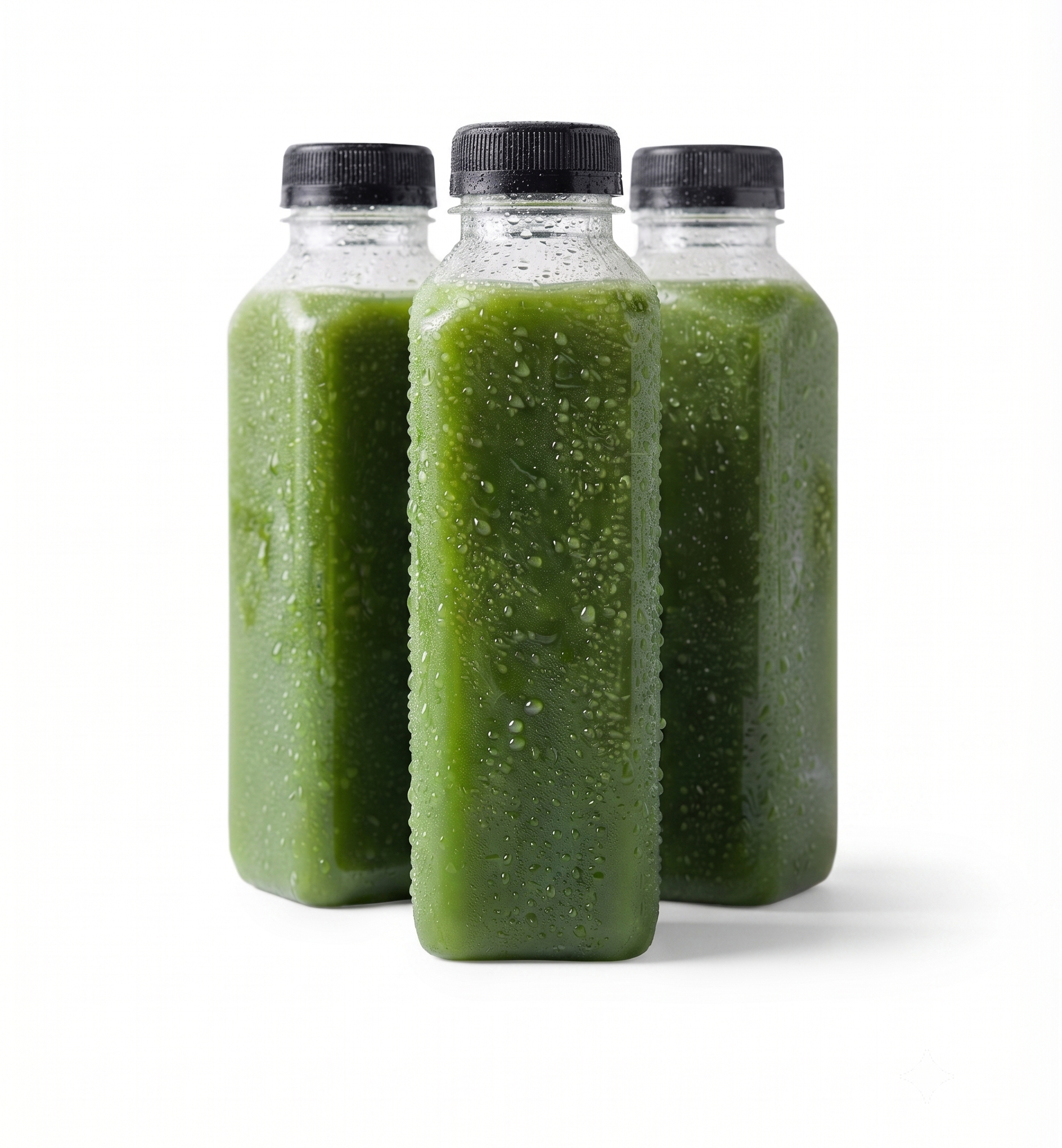
the first question: was it pressed or blended?
this is the fork in the road, and almost nobody explains it on the bottle.
cold-pressed juice is crushed and then strained. the pulp gets left behind, which means the fiber does too. what you are left with is a thin, clean, concentrated drink that packs a lot of produce into a small volume. that is genuinely impressive, and it is also why pressed juice hits your bloodstream fast: sugar without the fiber that normally slows it down.
blended juice keeps everything. the fruit and the vegetable go in whole and stay in, fiber included. the drink is thicker and fuller, it sits with you longer, and the sugar arrives with its brakes still attached.
neither one is cheating. they are different tools. if your goal is the most produce per sip, press it. if your goal is a drink that actually holds you for an hour, blend it. green flag is blended, which is the honest reason it drinks fuller than a pressed juice and the reason we describe it as one whole food short of a smoothie.
the second question: where does the sweet come from?
greens alone taste like a lawn. every green drink on earth solves that with fruit, and the fruit is where the sugar comes from.
this is the part most articles about green juice quietly skip, so here is ours out loud: green flag has 30 grams of sugar at 151 calories. it comes from mango and a small amount of honey. no added cane sugar, no syrup, no concentrate.
is 30 grams a lot? it is more than a soda drinker expects and less than a lot of the pressed juices sitting next to it in a cooler, where 40 or more is common. what matters is that it arrives with the fiber still in the bottle, and that you know the number before you decide when to drink one. our honest advice: green flag is a good morning or post-workout drink and a strange thing to have with dessert.
if a green juice does not print its sugar where you can find it, that is the answer to your question.
what green juice does not do
it does not detox anything. your liver and kidneys handle that continuously and have never once needed a beverage to help. any brand selling a cleanse is selling a story, and the story usually costs sixty dollars for three days of being hungry.
it is not a meal. at 151 calories and 3 grams of protein, green flag is produce you can drink. that is a real and useful thing to be. it is not lunch, and treating it like lunch is how people end up irritable by eleven.
it does not cancel anything out. a green juice next to a day of otherwise poor eating is a green juice next to a day of otherwise poor eating.
what it actually does is simpler and more useful than any of that: it puts spinach, cucumber, lemon and ginger into a day that was probably not going to include them. for a lot of people that is the entire reason to buy one, and it is a good enough reason.
what is actually in ours
green flag is water, frozen mango, cucumber, spinach, lemons, honey, ginger, xanthan gum and a pinch of kosher salt. that is the complete list, in order.
the xanthan gum is there for one reason: blended produce separates in a bottle, and a tiny amount keeps it from turning into a layer of water sitting on a layer of pulp by the time it reaches you. we would rather name it than pretend it is not there.
the honey is why green flag is vegetarian and dairy-free but not vegan. worth knowing if that matters to you.
it lands at 151 calories with 30 grams of sugar, $6.99 a bottle, made in our licensed minneapolis kitchen and delivered sunday across the twin cities. the full label lives on the product page, and the macros are printed on the bottle itself.
how to read a green juice label in ten seconds
stand in front of the cooler and check three things, in this order.
the first ingredient. if it is apple juice or a fruit concentrate, you are holding fruit juice that has been tinted green. if it is water, a vegetable, or a whole fruit, keep reading.
the sugar line. under 15 grams is a genuinely vegetable-forward drink. 20 to 35 is a normal fruit-sweetened green drink, which is most of them, ours included. north of 40 and you are drinking dessert.
pressed or blended. pressed will say cold-pressed, usually proudly. blended usually will not say anything, so look at the bottle: if you can see it is thick or if there is pulp settled at the bottom, the fiber is still in there.
three lines, ten seconds, and you know more about that bottle than the marketing on the front of it will ever tell you.
see the whole drinks lineup, or read the companion piece on whether protein coffee is actually worth it.
nutrition information reflects our recipe as made in our minneapolis kitchen and can vary slightly batch to batch. this is general food information, not nutrition advice for any individual.